

How Do You Take Care of Dentures?
Published September 18, 2026 9:00 amDentures become part of your daily routine pretty quickly, but caring for them is a little different from caring for natural teeth. They need to be cleaned every day, kept moist when they are out of your mouth, and checked if the fit starts changing. Your gums and any remaining natural teeth still need daily care too.
At Altitude Family Dental in Gypsum, Dr. Joshua Rudin and Dr. Greg Adair help patients with full, partial, and implant-supported dentures. Each type has its own details, but the basics stay pretty consistent: clean the denture well, give your gums some time without it, and pay attention when something starts rubbing, slipping, or feeling different. Over time, those habits can help the denture stay more comfortable and easier to manage.
A good denture routine also helps keep buildup, odor, and irritation under control. It helps protect the tissues underneath and gives us a better chance to catch fit changes before they become a bigger nuisance. Once the routine becomes familiar, it usually only takes a few minutes.
Clean Your Dentures Every Day
Dentures collect plaque, food, and bacteria just like natural teeth do. That buildup can settle into small areas along the denture base, around clasps, or where the appliance rests against the gums. So, daily cleaning helps keep those surfaces smoother and easier to manage.
Start by rinsing away loose food, then brush the denture with a soft-bristled toothbrush or denture brush. We recommend denture cleaner or mild liquid soap instead of regular toothpaste because many toothpastes are abrasive enough to scratch the surface. Over time, those tiny scratches can hold onto more stain and buildup.
Hold the denture carefully while you brush it, especially over a sink or folded towel in case it slips. Then rinse it thoroughly before putting it back in your mouth. If you use a denture cleanser, follow the product directions and rinse the denture well afterward.
Soak Dentures When You Take Them Out
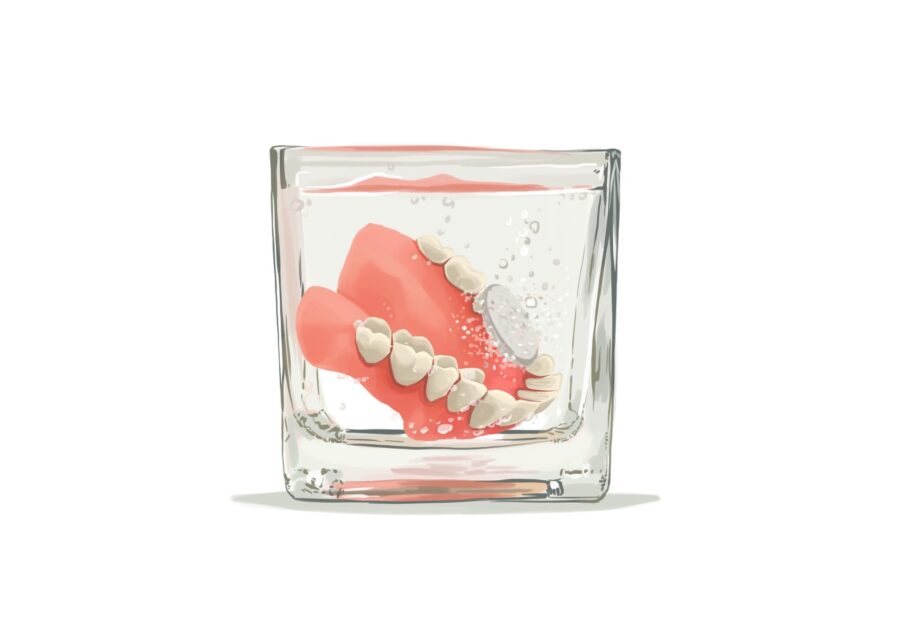
Dentures are designed to stay moist. If they dry out, the material can change shape, which can affect how the denture fits when you put it back in. So, when they are out of your mouth, keep them in water or a denture-soaking solution.
Soaking also gives the appliance time to loosen buildup while it is out of your mouth. That can make the next day’s cleaning a little easier. It also gives you a simple place to keep the denture overnight.
Use cool or lukewarm water rather than hot water. High temperatures can warp the denture base, and even a small change in shape can affect comfort and fit. If the denture starts feeling different afterward, bring it in so we can check it.
Take Your Dentures Out at Night
Giving your gums a break each day is part of denture care. We generally recommend removing dentures before sleep so the tissue underneath has time without the pressure of the appliance. Nighttime also gives you a natural window to clean and soak them.
That break can help reduce irritation and inflammation under the denture. It also keeps moisture and bacteria from staying trapped against the gums around the clock. For most patients, taking dentures out overnight becomes part of the routine pretty quickly.
If we give you different instructions because of a recent procedure or a specific type of denture, follow those directions instead. Sometimes the routine needs to be adjusted for healing or for the way a particular denture is designed. We can let you know what makes sense for your situation.
Clean Your Gums and Any Remaining Teeth
Taking care of the denture itself is only part of the routine. Your gums, tongue, palate, and any natural teeth that remain still need daily cleaning. Food and plaque can collect around those areas even when the denture itself looks clean.
After removing the denture, gently brush your gums and tongue with a soft toothbrush. This helps remove buildup and also gives you a chance to notice whether one area looks sore or irritated. If something keeps rubbing in the same place, bring it up at your next visit.
If you wear a partial denture, the remaining natural teeth deserve extra attention because they may help support the appliance. Brush them thoroughly and clean between them every day. Keeping those teeth healthy helps the partial fit and function the way it should.
Partial Dentures Need Extra Cleaning Around the Clasps
Partial dentures usually rely on the remaining natural teeth for support. Metal clasps or other attachments may grip nearby teeth to help hold the appliance in place. Because of that, those areas can collect food and plaque more easily.
Pay close attention around the supporting teeth and along the gumline. Clean between those teeth as well, especially where the partial sits close to them. Good cleaning around those areas can help protect both the teeth and the fit of the partial.
The partial itself should also be brushed carefully around the clasps. Those parts can bend if they are handled roughly, which can change the fit. If a clasp starts feeling loose or the partial begins moving more than usual, bring it in rather than trying to adjust the metal yourself.
Implant-Supported Dentures Need a Slightly Different Routine
Implant-supported dentures are more stable because they attach to dental implants placed in the jaw. They can make chewing and speaking feel more secure, but the implants and attachments still need regular cleaning. So, the routine has to cover both the denture and the areas around the implants.
If the denture is removable, take it out for cleaning as directed. You also need to clean around the implant attachments in the mouth because plaque can collect around those areas and irritate the gums. In some cases, a smaller brush, flossing tool, or another cleaner works better around those spaces.
Dr. Rudin or Dr. Adair can show you what works best around your specific implant setup. The routine can vary depending on the type of attachment and whether the denture is removable or fixed. We can walk you through it so you know exactly what to do at home.
What Should You Use to Clean Dentures?
A soft denture brush, soft toothbrush, denture cleanser, or mild liquid soap can all work well. We recommend avoiding regular toothpaste because many formulas are abrasive and can scratch the denture surface. Over time, those scratches can hold onto more stain and buildup.
A denture cleanser can help loosen buildup and reduce odor, especially when the appliance is soaked as directed. After soaking, rinse the denture thoroughly before putting it back in your mouth. That keeps cleanser residue off the tissues.
Household cleaners, bleach, and abrasive powders are much harsher than denture products. They can damage the material or affect metal components in certain partial dentures. So, stick with products made for dentures or the cleaner we recommend for your appliance.
Denture Adhesive Should Be Removed Every Day
Denture adhesive can help some people get a little more stability from a well-fitting denture. Creams, powders, wafers, and strips are all available, and each one is used a little differently. If you use adhesive, daily cleaning becomes even more important.
Remove the old adhesive from both the denture and your mouth every day. Fresh adhesive works better on clean surfaces, and layers of old product can interfere with the way the denture sits. Starting clean also makes it easier to notice if the fit itself is changing.
If you find yourself using more and more adhesive just to keep the denture from moving, bring it in for a fit check. That can be a sign that the gums or bone underneath have changed. In some cases, an adjustment or reline can help the denture sit more securely again.
Your Denture Fit Can Change Over Time
Your gums and jawbone continue to change after teeth are lost. Because of that, a denture that fit well when it was made may gradually start feeling looser. The change can happen slowly enough that you may not notice it right away.
You may notice movement when you speak, more food getting underneath, or a sore spot that keeps coming back in the same place. The denture itself may still look fine, but the shape of the tissues underneath may have changed enough to affect the fit. Sometimes the first clue is simply that the denture does not feel as secure as it used to.
Sometimes a denture can be adjusted or relined so it sits more comfortably again. Other times, a replacement may make more sense. Dr. Rudin or Dr. Adair can look at both the appliance and the tissues underneath before recommending what comes next.
Sore Spots Should Be Checked
A new denture can take some getting used to, and a little tenderness during the adjustment period can happen. However, one spot that keeps rubbing or becoming sore usually means the pressure is not being distributed evenly. That can make eating and speaking more uncomfortable as the day goes on.
If the same area keeps getting irritated, bring the denture in so we can see where it is pressing. Often, a small adjustment can improve the fit quite a bit. Once the pressure is balanced better, the tissue usually has a better chance to settle down.
Try not to file, sand, or reshape the denture yourself. Removing material in the wrong place can create a new pressure point somewhere else. We would rather see where the denture is rubbing before anything is changed.
Eating With Dentures Gets Easier With Practice
Eating can feel different when you first start wearing dentures. The gums and cheeks are getting used to the appliance, and the denture may move a little until you learn how to chew with it. Still, most people get more comfortable with practice.
Start with softer foods cut into smaller pieces, and try chewing on both sides at the same time. That can help keep the denture more balanced while you get used to the movement. As your confidence improves, you can gradually work more foods back into your routine.
Sticky, very hard, or tough foods may take more practice. Some foods may always be easier than others depending on the type of denture you wear. If something consistently feels difficult, bring it up at your next visit and we can check the fit.
Speaking May Feel Different at First
Your tongue is used to moving around your natural teeth, so a denture changes the space it has to work with. Certain words may sound different at first, and you may notice more saliva while your mouth adjusts. Still, speech usually becomes more natural as you spend more time wearing the denture.
Reading out loud or repeating words that feel awkward can help your tongue adapt to the new shape. Over time, those sounds often become easier. The change is usually gradual rather than immediate.
If speaking stays difficult or the denture moves noticeably while you talk, let us know. A fit issue can sometimes make speech harder than it needs to be. We can check whether the appliance is sitting securely enough.
Keep Regular Dental Visits Even With Full Dentures
Full dentures replace all the teeth in an arch, but routine dental visits are still part of the picture. We continue to check the gums, tongue, cheeks, and other soft tissues, while also looking at how the denture fits. Those visits give us a chance to look at the whole mouth, not just the appliance.
The denture itself also needs an occasional professional look. We can check for worn teeth, cracks, rough areas, or changes in the bite that may make the appliance less comfortable. We also look for sore spots or tissue changes underneath the denture.
Regular visits make it easier to compare how the fit changes over time. If the denture has started slipping or you are using more adhesive than before, bring that up during the visit. Small fit changes can often be addressed before they become much more noticeable.
How Long Do Dentures Last?
Dentures are durable, but they do change over time. The teeth can wear, the base can age, and the gums and bone underneath continue to remodel. Because of that, fit and function can gradually change even when the denture still looks fine.
There is no single replacement schedule that fits every patient. Some dentures continue fitting well for years, while others need relining, adjustment, or replacement sooner because the mouth has changed. The fit and condition of the appliance matter more than the age alone.
If chewing has become harder, the denture feels loose, or the bite no longer feels balanced, bring it in. Dr. Rudin or Dr. Adair can check whether an adjustment is enough or whether it is time to consider a new appliance. Then we can talk through the option that fits your situation best.
What if Your Dentures Break?
A crack, broken tooth, or damaged clasp can change the fit quickly. Save all the pieces if something breaks and bring them with you to the office. Keeping everything together gives us a better chance to see how the denture failed.
In many cases, a denture can be repaired, although the type and location of the damage determine what is possible. We will look at how the pieces fit together and whether the rest of the appliance is still in good condition. Then we can explain whether a repair or replacement makes more sense.
Avoid using household glue because it can change how the pieces fit and make a professional repair harder. Keep the denture out of heavy use until we can see it. Then call our office and let us know what broke so we can help you plan the next step.
Denture Care at Altitude Family Dental in Gypsum, CO
Taking care of dentures comes down to a consistent routine: brush them every day, soak them when they are out, clean your gums and remaining teeth, and pay attention when the fit starts changing. Those habits can keep the appliance cleaner and make it more comfortable to wear. They also give us a better chance to catch fit problems before they start causing sore spots.
At Altitude Family Dental in Gypsum, Dr. Joshua Rudin and Dr. Greg Adair can help with full, partial, and implant-supported dentures, along with adjustments when something no longer feels right. If your denture is rubbing, slipping, getting harder to clean, or feels different than it used to, schedule a visit at our Gypsum office. We’d be happy to take a look and help you keep your denture working comfortably!
Image from Authority Dental under CC 2.0
Categorised in: Dental Tips, Dentures, Oral Hygiene