

Dentures, Bridges, or Implants: Comparing Tooth Replacement Options at Altitude Family Dental
Published August 21, 2026 9:00 amIf you are ready to replace a missing tooth, there are usually a few ways to do it. The gap may be affecting how you chew, how your smile looks, or the position of the nearby teeth. So, choosing a replacement is less about finding the one “best” option and more about finding the one that fits your mouth and what you want from treatment.
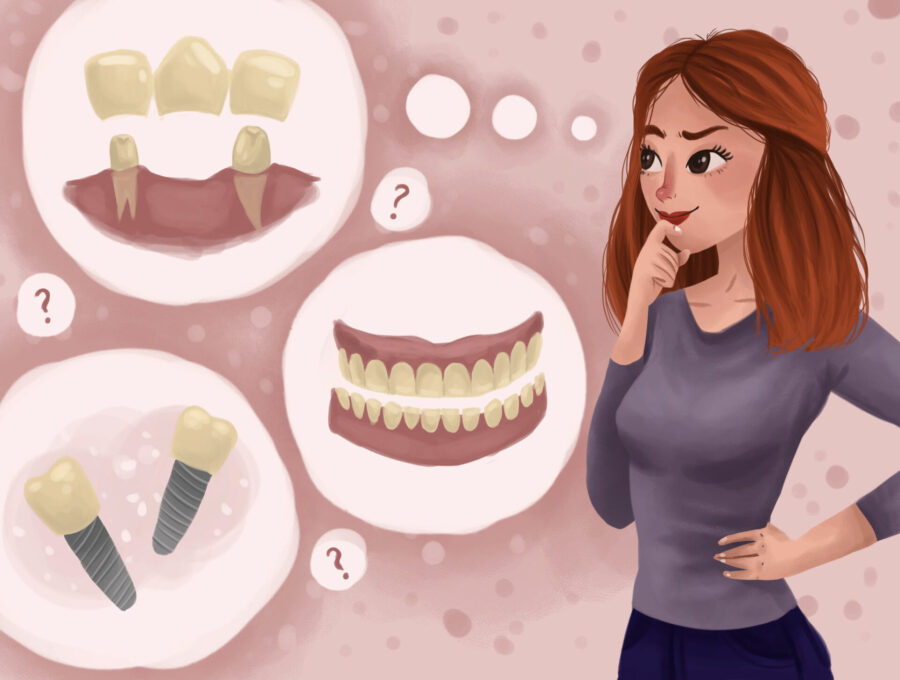
Dentures, bridges, and dental implants can all replace missing teeth, but each option has its own setup. A denture is removable, a bridge stays fixed and uses nearby teeth for support, and an implant is supported by the jawbone. Because of those differences, the right choice depends on how many teeth are missing, the condition of the surrounding teeth, the amount of bone available, and how you want the replacement to function day to day.
At Altitude Family Dental in Gypsum, CO, Dr. Joshua Rudin and Dr. Greg Adair can evaluate the space, the teeth around it, and the way your bite comes together. From there, you can compare the treatment time, maintenance, support, and feel of each option. For some patients, one choice makes the most sense right away, while others may have two or more good options to consider.
Dentures, Bridges, or Implants: Comparing Tooth Replacement Options at Altitude Family Dental
Dentures are removable appliances that can replace several missing teeth or an entire arch. A partial denture uses the remaining teeth for support, while a full denture replaces all the teeth in the upper or lower arch. Since dentures come out, they are cleaned outside the mouth and become part of a slightly different daily routine.
A traditional bridge is fixed in place and usually uses the teeth on both sides of the gap as anchors. The replacement tooth is connected between those crowns, so the neighboring teeth become part of the support system. Because of that, their condition matters quite a bit when deciding whether a bridge is the right option.
Implants take another route because they are placed in the jawbone. Once the implant heals, it can support a crown, bridge, or denture depending on how many teeth need to be replaced. So, although many people first think of implants as a one-tooth solution, they can be used in several different ways.
The number of missing teeth is only the starting point. Dr. Rudin or Dr. Adair will also look at the gums, bone, bite, and the condition of the teeth around the space. Then you can start comparing the options based on what your mouth can support and what you want from the replacement.
When a Dental Bridge May Make Sense
A bridge can work well when one tooth, or sometimes a small group of teeth, is missing and the teeth beside the space are strong enough to support it. Those teeth are prepared for crowns, and the replacement tooth is connected between them. Once the bridge is cemented, it stays in place while you eat, speak, and sleep.
If the teeth beside the gap already have large fillings or need crowns, a bridge may fit well with treatment they already need. The crowns can strengthen those teeth while also supporting the missing tooth in between. So, in that situation, the bridge can take care of more than one need at once.
But if the neighboring teeth are healthy and untouched, preparing them for crowns means removing tooth structure that otherwise may not need treatment. Then an implant may be worth comparing because it can replace the missing tooth without using those teeth for support. For many patients, that makes the condition of the neighboring teeth one of the main things to look at.
Cleaning around a bridge also takes an extra step. Since the replacement tooth is connected to the crowns beside it, regular floss cannot pass straight down between them. So, a floss threader, interdental brush, or water flosser can help clean underneath, and after a little practice, that usually becomes part of the routine.
When Dental Implants May Be a Good Option
A dental implant replaces the missing tooth from the root up. The implant is placed in the jawbone, and after it heals, a crown or another restoration is attached. Because the implant supports itself, the teeth beside the gap do not need to be prepared for crowns.
That can be a strong reason to consider an implant when the neighboring teeth are healthy. You can replace the missing tooth without changing the teeth around it, and the implant takes its own share of chewing pressure. So, for someone who wants a fixed replacement that stands on its own, an implant may be a good fit.
Bone is part of the decision, however. If the tooth has been missing for a while, the bone in that area may have shrunk. In some cases, grafting may be needed before an implant can be placed, which adds another step to the process.
Implants also take longer than some other tooth replacement options because healing is built into the process. The implant needs time to bond with the bone before the final restoration is attached. Still, some patients are comfortable with the longer timeline because they prefer the way an implant is supported.
When Dentures May Be the Better Fit
Dentures can replace several missing teeth at once, which makes them useful when there are gaps in different areas of the mouth. A partial denture fills those spaces while using the remaining teeth for support. A full denture replaces an entire upper or lower arch.
Because one appliance can replace several teeth, dentures may make more sense when a lot of teeth are missing. They also do not require every missing tooth to have its own implant or fixed restoration. So, depending on the mouth and the number of teeth involved, dentures can keep the treatment from becoming more extensive than it needs to be.
There is usually some adjustment at first. Eating can feel different, certain words may take a little practice, and the denture may rub in a spot or two while your mouth gets used to it. Then, if one area keeps getting sore, Dr. Rudin or Dr. Adair can adjust the denture so the pressure is spread more evenly.
The fit can change over time too because the bone and gums under a denture continue to change after teeth are lost. A denture that once felt snug may eventually move more or start trapping food in new places. At that point, a reline, adjustment, or replacement may help bring the fit back where it should be.
How the Options Compare for Chewing
A missing back tooth can change the way you chew without much thought. You may start moving steak, nuts, raw vegetables, or anything firmer over to the other side. After a while, one side may be doing most of the work simply because it feels better.
Implants can provide strong chewing support because they are anchored in the jawbone. Once healed and restored, they can take pressure without relying on the teeth beside them. So, if one side has been doing most of the chewing, an implant can help bring more balance back to the bite.
Bridges can also restore a solid chewing surface. Since they stay fixed, there is no need to take them out for meals, and the replacement tooth becomes part of the bite. However, the anchor teeth carry some of that load too, which is why their strength is so important.
Dentures restore chewing as well, but the experience is different because the appliance rests partly on the gums. Some foods may take more practice, especially in the beginning. Even so, a well-fitting denture can make eating far less frustrating than trying to work around several missing teeth.
How Each Option Affects the Teeth Around the Gap
A bridge depends on the neighboring teeth for support. Those teeth are prepared for crowns, and then they hold the replacement tooth between them. Because of that, the health of those teeth is closely tied to the bridge.
An implant does not use the neighboring teeth. That can be a big advantage when those teeth are healthy and you would rather leave them alone. The missing tooth gets its own support from the implant in the bone instead.
A partial denture may use clasps or other parts that rest on the remaining teeth. Those teeth still need to stay healthy because they help support the appliance. So, brushing and cleaning around them becomes even more important once the denture is in use.
If the teeth around the gap are already weak, loose, or heavily filled, that can change the recommendation. Dr. Rudin or Dr. Adair will look at those teeth before deciding whether they can support a bridge or partial denture. Sometimes what is happening on either side of the gap ends up shaping the plan more than the gap itself.
What Bone Loss Means for Tooth Replacement
The jawbone changes after a tooth is lost because the root is no longer there to stimulate it. Over time, the bone in that area can shrink. As that happens, the shape of the ridge can change, and there may be less bone available for certain treatments later.
Implants help stimulate the bone because chewing pressure travels through the implant into the jaw. That does not stop every change in the bone, but it does provide stimulation in a way that a bridge or traditional denture does not. So, for patients with enough bone, that can be one reason implants are considered.
A bridge replaces the visible tooth but does not replace the root in the jawbone. The bone underneath the replacement tooth can still change over time. Traditional dentures do not replace the roots either, so the ridge underneath them can change as well.
Those bone changes can affect how a denture fits. As the ridge gets smaller, the denture may start moving more or trapping food underneath. Then a reline or adjustment may help it sit more securely again.
How Long the Treatment Process Takes
A bridge can usually be completed over a shorter series of appointments. The supporting teeth are prepared, impressions or scans are taken, and a temporary bridge may be worn while the final one is made. Then the permanent bridge is checked and cemented in place.
Dentures also take several visits because the shape of the mouth, bite, and tooth position need to be recorded. If teeth need to be removed first, the timing can vary. Some dentures are placed soon after extractions, while others are made after more healing has taken place.
Implants usually take the longest because the bone needs time to heal around them. If bone grafting is needed first, that adds another stage. So, the full process can take several months before the final restoration is attached.
If getting the replacement completed sooner is important to you, that may make a bridge or denture more appealing. If you are comfortable with a longer process, an implant may still be worth considering. Treatment time is one part of the comparison, along with support, cleaning, and what the surrounding teeth need.
How the Options Compare for Daily Cleaning
Cleaning should be part of the decision before treatment starts, not something you figure out after the restoration is already in place. You are investing time and money into replacing a tooth, so you want an option you can realistically keep clean every day. If plaque builds up around an implant, under a bridge, or around the teeth supporting a partial denture, the tissues and supporting teeth can eventually develop problems that put the restoration at risk.
A single implant crown is cleaned much like a natural tooth. You brush around it and clean between it and the neighboring teeth, while paying attention to the gumline around the implant. The implant itself cannot get a cavity, but inflammation around it can damage the gums and bone that support it.
A bridge needs more attention underneath the replacement tooth because regular floss cannot pass straight through the connected units. A floss threader, interdental brush, or water flosser can help clean that space and the edges of the supporting crowns. If you know you are unlikely to use those tools regularly, that is worth discussing before choosing a bridge.
Dentures come out for cleaning, which some patients find easier because they can see the entire appliance while they clean it. However, the gums underneath and any remaining natural teeth still need daily care too. With a partial denture, those supporting teeth are particularly important because if they develop decay or gum problems, the denture may no longer fit or function the same way.
This is one area where your normal habits really count. A replacement can be well made, but it still depends on the teeth, bone, and gums around it staying healthy. Choosing something you can comfortably keep clean gives that investment a much better chance of serving you well for years instead of needing to be repaired or replaced because buildup was too difficult to control.
What About Comfort and Adjustment?
A bridge usually starts to feel familiar once you get used to its shape. At first, your tongue may notice that there is suddenly a tooth where there used to be a gap. Then, as you chew and speak with it, that new shape usually becomes much less noticeable.
An implant crown also stays fixed, so the final restoration can feel a lot like a natural tooth. Most of the adjustment happens during the healing period before the crown is placed. Once everything has healed, the implant becomes part of the bite without something removable to think about.
Dentures take more practice at first. The tongue, cheeks, and gums all have to get used to having an appliance in the mouth, so eating and speaking can feel different for a while. Then, as you wear the denture more, those movements tend to become more familiar.
If the same spot keeps rubbing or getting sore, call the office. Continuing to irritate the area usually just makes eating more uncomfortable. Dr. Rudin or Dr. Adair can adjust the denture so one spot is not carrying too much pressure.
What About Cost?
Cost can vary quite a bit because dentures, bridges, and implants involve different materials and different amounts of treatment. A denture may replace several teeth with one appliance, while a bridge uses crowns and a replacement tooth. Implants involve surgery, healing, and a final restoration, so they are usually more expensive upfront.
Insurance coverage can vary too. Some plans may help more with dentures or bridges, while implant coverage can be more limited. So, it is better to check the details of your specific plan rather than assume every replacement option is covered the same way.
The number of missing teeth also changes the total. Replacing one tooth is very different from replacing a whole arch. Dr. Rudin or Dr. Adair can explain the treatment first, and then the office can help you review the expected cost.
It also helps to look beyond the starting price. Dentures can need relines or replacement as the mouth changes, while bridges and implants have their own maintenance over time. Looking at both the initial treatment and what comes later gives you a fuller picture.
Can More Than One Option Work?
Yes. A single missing tooth may be replaceable with either a bridge or an implant. Several missing teeth may be replaced with a partial denture, an implant-supported bridge, or another combination.
If all the teeth in an arch are missing, the choices may include a traditional denture or a denture supported by implants. So, there is often more than one way to rebuild the same area. Which one fits best depends on what your mouth can support and what you want from treatment.
You may care most about having something fixed, avoiding surgery, getting treatment done sooner, or leaving healthy neighboring teeth untouched. Those preferences can help narrow the choices. Cost, cleaning, and how much maintenance you want to handle can play a part too.
Dr. Rudin or Dr. Adair can show you what each option would involve in your case. Once you know what the treatment, cleaning, and timeline look like for your mouth, comparing them usually gets much easier.
Choosing Between Dentures, Bridges, and Implants
If one tooth is missing and the neighboring teeth already need crowns, a bridge may make sense. If those teeth are healthy and there is enough bone, an implant may be a better fit because it leaves them alone. And if several teeth are missing in different areas, a partial denture may replace those spaces without preparing several teeth for crowns.
If many or all teeth are missing, a full denture may replace the whole arch, while implants may be used to support a denture or another fixed restoration. The number and location of the missing teeth start to narrow the choices pretty quickly. Then bone support, gum health, and the way you bite help narrow them further.
X-rays and scans can show things that are not obvious from looking at the gap in the mirror. They can show how much bone is available, how the roots of nearby teeth look, and whether the area can support an implant or bridge. With that information, Dr. Rudin or Dr. Adair can explain which options make sense and what each one would involve.
At Altitude Family Dental, Dr. Rudin and Dr. Adair can also help you compare what daily life looks like with each choice. One option may involve more healing, while another needs more cleaning around supporting teeth or comes in and out each day. Once those differences are connected to your own mouth and routine, the decision usually becomes easier to picture.
Tooth Replacement at Altitude Family Dental in Gypsum, CO
Replacing a missing tooth can make chewing feel more balanced, fill a space that has been bothering you, and help support the teeth around it. Dentures, bridges, and implants can all get you there, but each one comes with a different routine, timeline, and type of support. So, the best choice depends on what is happening in your mouth and what you want from the replacement.
At Altitude Family Dental in Gypsum, CO, Dr. Joshua Rudin and Dr. Greg Adair can examine the area, explain your options, and help you compare dentures, bridges, and implants in a way that makes sense for you. Call Altitude Family Dental to schedule a tooth replacement visit with Dr. Rudin or Dr. Adair—we’d be happy to help you find an option that fits your smile, your bite, and your everyday routine!
Image from Authority Dental under CC 2.0
Categorised in: Dental Bridges