

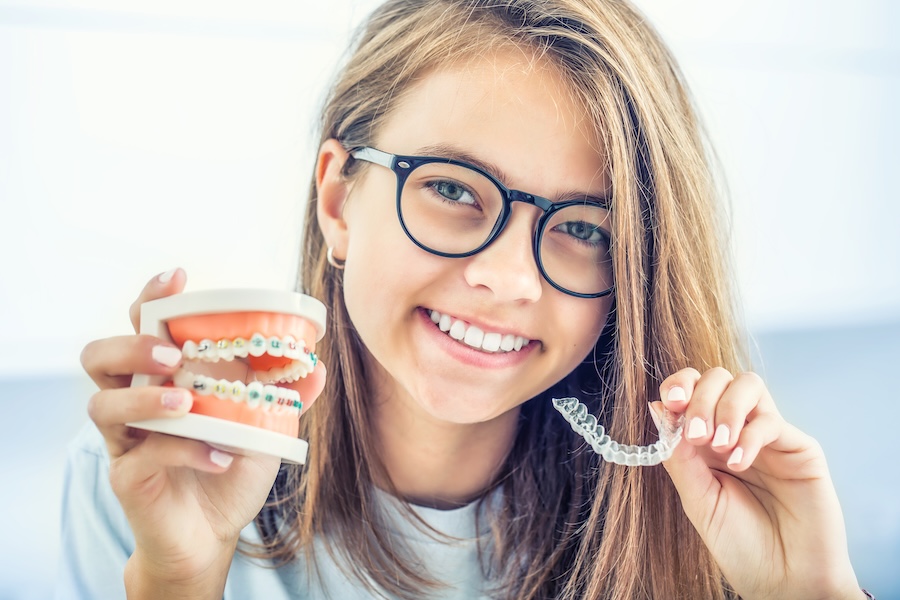
Invisalign vs. Conventional Braces in Gypsum: How to Choose the Right Orthodontic Option
Published July 16, 2026 9:00 amOnce you decide to straighten your teeth, choosing the appliance can feel like a second decision layered on top of the first. Invisalign may sound appealing because the trays are clear and removable. Braces, meanwhile, stay attached and do not depend on remembering to wear them.
Aligners come out for meals, brushing, flossing, and short breaks, but they need to go back in promptly. Braces remain in place through work, school, sleep, and meals, although cleaning around them takes more time.
Your bite and the movement each tooth needs will shape the recommendation. Mild spacing or crowding may respond well to clear trays, while larger rotations or more involved bite correction may be easier to manage with brackets and wires. At Altitude Family Dental in Gypsum, CO, Dr. Joshua Rudin and Dr. Greg Adair can compare both options after examining your teeth, bite, gums, and existing dental work.
How Invisalign and Braces Straighten Teeth
Invisalign uses a series of clear plastic trays made to fit closely over the teeth. Each set applies pressure in selected areas, and the trays are changed as the teeth move. Small tooth-colored attachments may also be added so the aligners can grip certain teeth more effectively.
Conventional braces use brackets attached to the teeth and a wire that passes through them. The wire guides movement, while adjustments change the amount and direction of pressure. Elastics may be added when the upper and lower teeth need help moving into a better bite.
A slightly crowded front tooth does not need the same kind of movement as a deeply rotated tooth or a bite that needs broader correction. For that reason, the appliance is chosen around the movement required rather than appearance alone.
Invisalign Is Less Noticeable, Though Not Invisible
Many adults and teenagers ask about Invisalign because the trays are much less visible than metal brackets. They can blend into work meetings, school, photos, and everyday conversations without drawing much attention. For someone who feels self-conscious about braces, that can make treatment easier to begin.
Most Invisalign cases still involve more than smooth trays. Tooth-colored attachments may be bonded to several teeth, and elastics may be needed for bite correction. Someone standing close may notice them, although they remain subtler than conventional braces.
Speech can feel slightly different during the first few days. The tongue needs time to adjust to the plastic, especially around certain sounds. Most patients settle into speaking normally once they have worn the aligners consistently.
Braces Stay in Place Throughout Treatment
Braces do not need to be removed, stored, or remembered after lunch. Once they are attached, they continue guiding the teeth throughout the day and night. This can be helpful for someone who knows that wearing removable trays for most of the day would become difficult.
Fixed brackets also give the dentist steady control over tooth position. The wire and other components can be adjusted as the teeth respond, which may help with rotations, bite correction, or movements that need more direct control.
Brushing takes longer with braces, certain foods can damage the hardware, and elastics must be worn when prescribed. The appliance stays in place, but the patient still has daily work to do.
The Bite May Point More Strongly Toward One Option
Some people mainly need mild spacing or crowding corrected. Others have an overbite, underbite, crossbite, open bite, or several teeth that need larger movements. Those cases may not respond equally well to both systems.
A 2022 systematic review found that clear aligners can be an effective alternative to fixed appliances in selected mild-to-moderate cases. However, the authors did not find enough evidence to treat severe cases as equally predictable with aligners.
Newer attachments, elastics, and planning software have expanded what clear aligners can handle. Even so, one difficult rotation or bite relationship may influence the entire plan. Dr. Rudin or Dr. Adair may recommend braces because of one movement that is not obvious when you look only at the front teeth.
Invisalign Depends on Consistent Wear
Clear aligners work only while they are on the teeth. They usually need to be worn for most of the day and night, coming out for meals, most drinks, brushing, and flossing. Leaving them out for long stretches gives the teeth less time under the planned pressure.
Busy days are where the routine can slip. The trays may stay in their case after lunch, get wrapped in a napkin at a restaurant, or remain out through an evening event. When that happens repeatedly, the next set may not fit as closely as expected.
A poorly fitting tray may need to be worn longer, and some patients need another scan with additional aligners. That can extend treatment. Someone who already keeps track of retainers, contact lenses, or daily medication may find the routine easier.
Braces Trade Wear-Time Responsibility for More Cleaning
With braces, the appliance stays on the teeth. However, brackets and wires create more places for plaque and food to collect. Cleaning has to reach above, below, and between the hardware.
Floss threaders, interdental brushes, and water flossers can make that routine more manageable. At first, it may take several extra minutes, although most patients become faster with practice. More frequent cleanings or fluoride treatment may be recommended when plaque begins building around the brackets.
Poor cleaning can lead to swollen gums or white areas of weakened enamel around the brackets. Those marks may become visible after the braces are removed. Careful home care helps protect both the gums and the finished result.
Eating Is More Flexible With Invisalign
Because the trays come out for meals, Invisalign does not require the same food restrictions as braces. Apples, popcorn, crusty bread, and chewy foods remain available. The teeth should be cleaned before the aligners go back in, especially after sugary or sticky foods.
That step can feel simple at home and less convenient during work, school, or travel. Putting trays back over food residue holds it against the teeth and may increase the risk of cavities or odors. Water is usually the easiest drink while the trays remain in place.
Coffee, tea, soda, and wine can stain the aligners or expose the teeth to sugar and acid beneath them. Hot drinks may also distort the plastic. Some patients adapt quickly, while others begin planning meals and drinks more carefully.
Braces Call for Some Food Adjustments
Hard, sticky, or very chewy foods can bend wires or loosen brackets. Ice, hard candy, caramel, gum, and biting directly into firm foods are common sources of trouble. A broken bracket may not hurt, but it can stop guiding the tooth correctly.
Most meals do not need a complete overhaul. Apples can be sliced, corn can be cut from the cob, and firmer foods can be broken into smaller pieces. These changes reduce direct pressure on the brackets.
Someone who eats slowly at home may barely notice the restrictions. A frequent snacker, athlete, or person who travels often may feel them more.
Comfort Feels Different With Each Option
Both aligners and braces can make the teeth sore as they begin moving. New aligners often create pressure for the first day or two, while braces may feel tender after placement or wire adjustments. The soreness usually eases as the teeth adapt.
Aligners have smooth plastic surfaces, although an edge may occasionally rub the tongue or gum. Brackets can irritate the cheeks and lips at first, and orthodontic wax may help while the tissue adjusts. A loose wire can also create a sharp spot that needs attention.
A 2020 systematic review and meta-analysis found that Invisalign patients reported less pain than fixed-braces patients during the first few days of treatment. After that early period, the review found no consistent difference through the following months. The studies mainly involved mild cases, so the finding does not apply neatly to every patient.
Treatment Time Depends on the Case and the Routine
Mild spacing may move efficiently with aligners, while another case may need refinements, elastics, or several extra sets of trays. Braces can also take longer when appointments are missed, brackets break, or elastics are not worn.
A 2024 systematic review found low-certainty evidence that treatment time may be similar for aligners and braces in mild-to-moderate crowding cases. The studies varied too much for the authors to conclude that one option is consistently faster.
The estimate becomes more useful after the teeth and bite have been examined. At that point, the dentist can explain what movements are planned and what could extend the timeline.
Teenagers and Adults May Face Different Tradeoffs
Some teenagers handle Invisalign very well. They wear the trays, keep track of the case, and put them back in after meals without much prompting. Others may do better with braces because the appliance cannot be lost or left at home.
Sports can be managed with either option. Aligners usually come out for a protective mouthguard, while braces require a guard made to fit over the brackets. The sport and level of contact will help guide that choice.
Adults may have crowns, fillings, implants, recession, or a history of gum disease that affects planning. Teeth with crowns can often move, but dental implants cannot because they are fixed to the bone. Gum health may also need attention before either type of orthodontic treatment begins.
Invisalign May Still Include Attachments and Elastics
Clear aligners are often pictured as smooth trays with nothing else attached to the teeth. In practice, many cases use small tooth-colored attachments to guide rotation, tipping, or other movements. These attachments remain on the teeth while the trays fit over them.
Elastics may also connect the upper and lower teeth when the bite needs correction. They need to be removed and replaced along with the trays. Skipping them can slow the part of treatment they were meant to handle.
Invisalign can still look subtle with these features, but patients should know they may be part of the plan before treatment begins.
Cost Should Be Compared as a Complete Plan
Invisalign and braces can fall within a similar price range, although the total depends on complexity, treatment length, and what the fee includes. Insurance coverage also varies, with some plans setting age limits or lifetime orthodontic maximums.
When comparing estimates, ask whether records, office visits, refinements, repairs, and retainers are included. A lower starting price may not represent the full course of care.
Retainers are needed after either treatment because teeth can shift once active movement ends. The retention plan should be discussed before the first tray or bracket is placed.
Choosing Invisalign or Braces at Altitude Family Dental in Gypsum
Invisalign may suit someone who wants a less noticeable appliance and can keep the trays in for the prescribed time each day. Braces may be easier for someone who would rather manage food and cleaning changes than keep track of removable trays. The bite may narrow the choice further.
At Altitude Family Dental in Gypsum, CO, Dr. Joshua Rudin and Dr. Greg Adair can examine the teeth and explain how each approach would work for that case. The visit can cover attachments, elastics, cleaning, expected treatment time, existing dental work, and the movements the bite requires.
Schedule an orthodontic consultation with Altitude Family Dental to compare Invisalign and conventional braces. Once the plan is tied to your own teeth and daily routine, the stronger option is usually easier to see.
Categorised in: Clear Aligner Therapy, Orthodontics